Sunday, November 30, 2025

Wesley's Bands, Classes, and Societies

I spent this weekend in Saskatoon, SK teaching a course entitled "The Heart of Free Methodism." It's required for those interested in becoming ordained or commissioned ministers in the Free Methodist Church in Canada. I had a great time teaching and learning with five pastors from Lakeview Church in Saskatoon and one lay minister from Cornerstone Church in Prince Albert, SK.

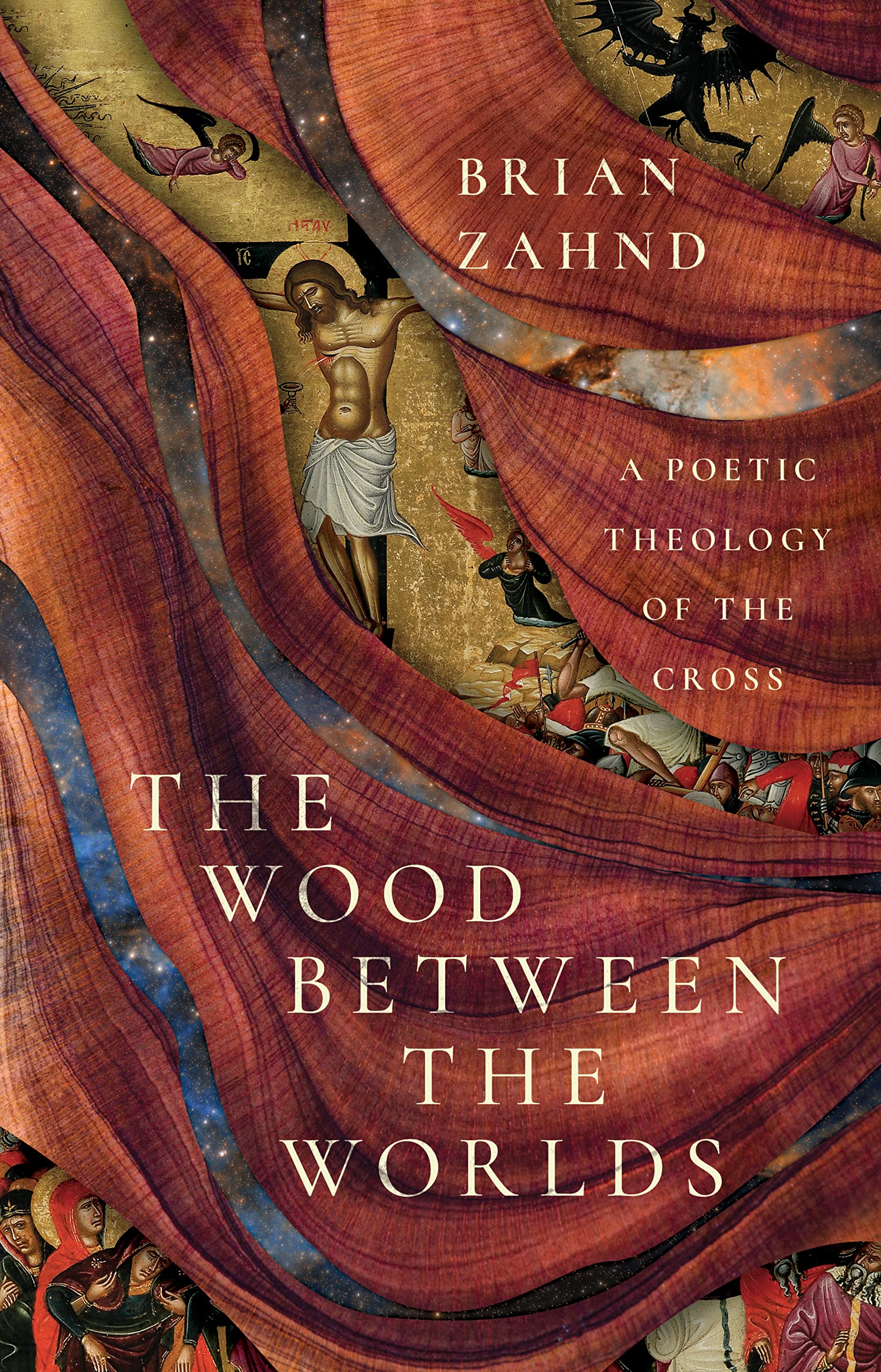
One of the ways this course intersects with my current book project is the focus on John Wesley and his system for organizing people who later became known as Methodists. As a Church of England minister, Wesley saw the need to preach the Good News to the poor and to support them to learn and grow in Christian community. The Church of England did not have systems in place so Wesley used societies--small-ish communities that gathered for prayer, worship, and other practices. Societies would comprise a group of classes, essentially small groups of 10-12 people committed to learning and growing in Christian faith. Wesley also had a system of bands, which were even smaller groups that intensely focused on accountability and helping believers grow in holiness.

 Methodist Class Meeting


The beauty of the system was that societies, classes, and bands were all led by lay people. Furthermore, the class was where new people could attend and learn from those who had been walking with Christ for a long time. This has obvious ties to the early church, which met house-to-house. While Wesley's and the early church system is fraught with complications, there is a sort of beautiful simplicity to it.

As I write my final book chapter, one focused on the question, "What now?", I find myself wondering if and how the Canadian church could begin to conceive of itself as a movement of smaller groups or house sized churches. This would take the pressure off of full-time pastors and make room for more leaders to share the load. 

It's not a perfect idea, but it's a start.

Saturday, November 15, 2025

Book Proposal Accepted!!!

 IVP Academic (@ivpacademic) / Posts / X

I'm thrilled!

Yesterday, I received an email from my new editor at IVP Academic:

Hi, Jason:
 
I have good news from the Publishing Committee! The Publishing Committee has approved your proposal for Funding Preachers in the New Testament and is offering a contract. Congrats! We are excited about the prospect of having this project here at IVP Academic.

I look forward to working with you on this project, and I’m thrilled that it was so warmly received by the Committee.

This journey began three years ago. It started with an idea and, if all goes well, maybe it will be published in the coming year or two. Scroll down to read more. 

Wednesday, November 12, 2025

Book proposal submission

I'm back. After going silent on Blogger well over a year ago, I thought it might be time for an update. Back then I was blogging regularly about the book I was writing. I was getting close to compiling a proposal and sending it to editors. Then, things changed. I decided to reach out to a colleague with a voluminous publishing record to ask his advice about my process. His one statement derailed my plan: FINISH THE MANUSCRIPT. From his experience, editors will want to see a full manuscript before offering a contract to someone, like me, with a limited publishing record. So I decided to stop blogging, put the proposal on hold, and finish the manuscript.

Now, I am happy to report two things: first, I have nearly a complete manuscript drafted. And second, a fellow dean, who is also early in his publishing career, put me in touch with an editor. That editor likes my proposal (I ended up compiling and submitting it) and is bringing to her publishing house's editorial committee tomorrow!

I'm thrilled, nervous, and exited. So stay tuned... 

Oh, and as it turns out, my prolifically published friend's advice was not quite accurate. The publisher did not need to see the full manuscript before submitted it to the process.

Sunday, August 18, 2024

Step #8 - State my book's thesis

The next step in preparing my book proposal for an editor is to state my book's thesis. This step was surprisingly easy and fairly straightforward. Here's what I've come up with: 

Title: Funding Preachers in the New Testament: Rethinking paid Christian work in the First Century and Today 

Thesis: In my book, I argue that the dominant assumption about how early church ministry was funded, that early church leaders lived off the generosity of Christian members, is misguided. Rather, most religious leaders, including Jewish sages, rabbis and early Christian pastors, relied on manual labour as a means of self-support. It was not until the post-apostolic church that church leaders began to rely exclusively on support from others. This has implications for how we should think about paid congregational ministry today, especially with the growing popularity of multi- and bi-vocational ministry.

It is important for the thesis to carry the whole project. Therefore, I am trying to ensure each chapter hinges on the thesis. I'll say more in future blog posts.

Sunday, August 11, 2024

Step #7 - Articulate my book's audience

The next step in preparing a book proposal for an academic editor is to envision and describe my book's audience. In her book, The Book Proposal Guide, Laura Portwood-Stacer identifies four possible audiences for academic books: 1) other scholars; 2) undergraduate and graduate students; 3) practitioners; and 4) general readers (this is not really a group and naming this as an audience should be avoided).

In writing my book I've tried to keep two audiences in mind: other scholars and practitioners. Since I'm making claims that have not been made before, I'll need to engage with scholarly sources and show support for my arguments. Therefore, my book is written primarily for other scholars. However, I also want to get my ideas into the hands of practitioners, allowing my ideas to impact those who are serving in pastoral ministry (pastors) and overseeing pastoral work (denominational leaders).

So, without further ado, here is the paragraph describing my book's audience:

My book, Funding Preachers in the New Testament: Rethinking paid Christian work in the First Century and Today will challenge previously held assumptions among New Testament scholars and practical theologians about pastoral work in the New Testament. Whereas New Testament professors will be interested in my approach to biblical texts and contexts, practical theologians, particularly those educating pastors and those in ministry, will benefit not only from the texts and contexts but also my application for today. Furthermore, practitioners, such as multi-vocational pastors, denominational leaders, and church planters will also find my book interesting since I’ve written with them in mind. This is particularly true in the final chapter where I apply biblical principles to contemporary ministry contexts. My book’s appeal to practitioners is evident by my experience of being invited to speak about this topic to pastors at the Free Methodist Church in Canada’s General Conference in 2024. I have also been in contact with two other Canadian denominations whose leaders have also shown interest in my work.

The Dangers of Renting Your Audience - Prize Content

Sunday, July 21, 2024

Step #6 - Collect a list of comparable titles

24 Must-Read Books For College Students – Forbes Advisor

As I continue researching and writing, I am working through the steps of preparing a book proposal recommended in The Book Proposal Book. Today I'll be describing Step #6 - Collect a list of comparable titles.

Comparable titles are books that are similar to the book I am writing in terms of audience. At first I thought this step was like a literature review, where I would find books that are written on a similar topic to mine and summarize them. According to The Book Proposal Book the list of comparable titles is a compilation of books that are similar in audience. Its purpose is to show editors that there is a market for my book. This is proving to be one of the hardest parts of building my proposal. Since my book is about how pastors and church leaders were funded in the historical period of the New Testament, I am crossing into at least two areas that have been commonly explored. On the one hand books have been written about money and the New Testament. Of course on the other hand, books have been written about pastoral ministry in the New Testament. Neither of these areas are directly related and they do not normally intersect with each other. When it comes to finding comparable titles I attempted to find ones that have taken a unique approach to an aspect of New Testament studies that could be similar to my work.

Here are some books I've found so far:

The Open Sanctuary: Access to God and the Heavenly Temple in the New Testament (Baker Academic, 2024).

This important work provides a corrective to the way many people understand the Jerusalem temple in early Christian thought and is the first comprehensive study of the heavenly temple in the New Testament. Similar to The Open Sanctuary, my book is the first comprehensive study about an important another theological concept, funding for vocational ministry. I too have drawn on New Testament writings and early Christian literature as a way to do a deep dive into a particular topic and correct previously held assumptions

Strange Religion: How the First Christians Were Weird, Dangerous, and Compelling (Brazos, 2024).

This book invites readers to see early Christians as practicing a whole new way of thinking about and doing religion that would have been seen as bizarre and dangerous, when compared to Roman religion and most other religions of the ancient world. In a similar way my book calls readers to read New Testament texts with the social context in mind but unlike Gupta's work, my chapters progress from the ministry of Jesus through Paul's letters and into early Christian literature rather than focusing mainly on the social context.

Remarriage in Early Christianity (Eerdmans, 2024).

In this book, A. Andrew Das takes a deep dive into the subject of remarriage. I mirror Das's chapter progressions, moving from Jesus and the Gospels through Pauline work and into early church literature. Yet unlike Das's work, my focus is on the theme of ministry funding rather than remarriage. Both of our books are written for scholars primarily with some crossover appear to laity with an interest in this topic.  

Minister Matters: Pastors, Their Life and Work Today (Cascade, 2024).

This edited volume provides a multivalent approach to how pastoral work is seen and performed today. Like my book, it provides insights into the contemporary office of pastor by looking at different aspects and angles of the work through theological lenses. My book relies on the New Testament scriptures and early church documents as the lens to look at a the pastoral vocation, which comes as an application at the end of the book. 

I have attempted to provide four comparable titles that are written on similar themes and to similar audiences to my book. In my next post I will discuss the audience of my book. Stay tuned!

Thursday, July 11, 2024

Book Review: Theological Education: Principles and Practices of a Competency-Based Approach

Theological Education

In the closing chapter of my book Glassroom Learning, 2023 I briefly discuss Competency-Based Theological Education. It is a relatively new approach to theological education and very little has been written about it.

Kenton Anderson and Gregory Henson's book, Theological Education: Principles and Practices of a Competency-Based Approach is a helpful introduction to CBTE for those who might be curious. You can read my review here: https://www.faithtoday.ca/Magazines/Jul-Aug/Theological-Education-Principles-and-Practices-of 

Related Posts with Thumbnails