Friday, December 19, 2025

Co-Vocational Certificates

Back in the summer I was trying to figure out a way for Co-Vocational Canada to be sustainable. As you may be aware, Co-Vocational Canada is a ministry of Briercrest Seminary that has been funded by a generous grant from the Lilly Foundation through the Pathways for Tomorrow phase 2 initiative. Our funding is set to run out at the end of 2026 (or possibly 2027). 

While thinking about sustainability, I was in conversations with denominational leaders to try and find a way to help lay people gain some biblical and theological foundations without having to enrol in a full degree program. As I talked with them I realized that most of them were open to accepting an unaccredited pathway, like our new CoVo certificates, as credible learning for those seeking denominational credentialing.

The certificate concept is simple. Briercrest Faculty members will teach their specialties, split them into 3 hour, online sessions. Participants pay what they would for an accredited course and they receive the same number of in-class hours and weeks as they would for an accredited course. However, there are no assignments and they will have five different faculty members and diverse topics covered over those 12 weeks. We are piloting our Basic CoVo Certificate in January and 12 participants have already signed up. I'm thrilled! This will not only help lay people learn and grow it will also go a long way to making CoVocational Canada sustainable for the long term. 

If you want to know more or to sign up, click this link: www.briercrest.ca/covo    

 

Sunday, December 7, 2025

House churches and unpaid pastors

What if the Church comprised a massive collection of house churches? As I write the final chapter of my book, this is the question rolling around in my mind. Here's how I've landed on such a radical question:

First, I've looked at the life and ministry of Jesus and his disciples. My theory is that Jesus and his band of followers did not abandon their crafts and vocations but they continued to work as they preached the Kingdom.

Second, I've examined the social context of the New Testament. From voluntary associations to households managed by well-to-do people, the early church assembled in homes. While this wasn't the only context, it was a significant one. 

Third, I've explored Paul's teachings for glimpses and clues for how pastors and leaders were paid. After my deep dive I've come to this conclusion: Paul does not seem to endorse a system where church leaders get paid.

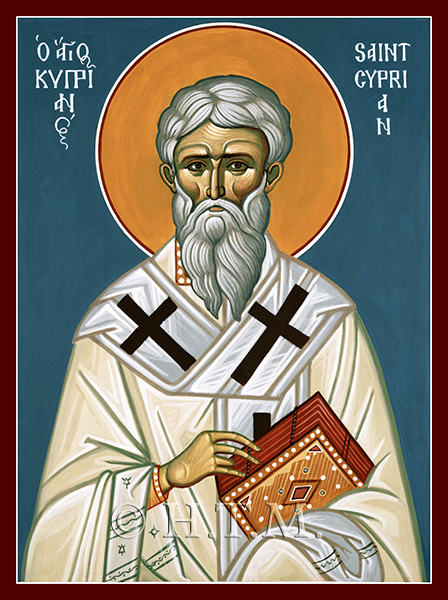
Fourth, I've investigated post-apostolic texts and the world of the early centuries. The idea of paying a pastor appears long after Paul, mid-way through the third century. It shows up in the writings of St. Cyprian of Carthage. He appeals to the Old Testament to argue for a priestly paradigm of ministry where church leaders assume a role similar to levitical priests. While this idea takes time to catch on, Constantine the Great's political reforms make this a favourable paradigm for the church.

So, what if the North American church returned to an ancient model? Could you imagine a modern Canadian or American context where churches were smaller and pastoral expectations less, enabling its team (not one pastor, but many) of leaders to work for pay outside the church? 

A286IconStCyprian 

Sunday, November 30, 2025

Wesley's Bands, Classes, and Societies

I spent this weekend in Saskatoon, SK teaching a course entitled "The Heart of Free Methodism." It's required for those interested in becoming ordained or commissioned ministers in the Free Methodist Church in Canada. I had a great time teaching and learning with five pastors from Lakeview Church in Saskatoon and one lay minister from Cornerstone Church in Prince Albert, SK.

One of the ways this course intersects with my current book project is the focus on John Wesley and his system for organizing people who later became known as Methodists. As a Church of England minister, Wesley saw the need to preach the Good News to the poor and to support them to learn and grow in Christian community. The Church of England did not have systems in place so Wesley used societies--small-ish communities that gathered for prayer, worship, and other practices. Societies would comprise a group of classes, essentially small groups of 10-12 people committed to learning and growing in Christian faith. Wesley also had a system of bands, which were even smaller groups that intensely focused on accountability and helping believers grow in holiness.

 Methodist Class Meeting


The beauty of the system was that societies, classes, and bands were all led by lay people. Furthermore, the class was where new people could attend and learn from those who had been walking with Christ for a long time. This has obvious ties to the early church, which met house-to-house. While Wesley's and the early church system is fraught with complications, there is a sort of beautiful simplicity to it.

As I write my final book chapter, one focused on the question, "What now?", I find myself wondering if and how the Canadian church could begin to conceive of itself as a movement of smaller groups or house sized churches. This would take the pressure off of full-time pastors and make room for more leaders to share the load. 

It's not a perfect idea, but it's a start.

Saturday, November 15, 2025

Book Proposal Accepted!!!

 IVP Academic (@ivpacademic) / Posts / X

I'm thrilled!

Yesterday, I received an email from my new editor at IVP Academic:

Hi, Jason:
 
I have good news from the Publishing Committee! The Publishing Committee has approved your proposal for Funding Preachers in the New Testament and is offering a contract. Congrats! We are excited about the prospect of having this project here at IVP Academic.

I look forward to working with you on this project, and I’m thrilled that it was so warmly received by the Committee.

This journey began three years ago. It started with an idea and, if all goes well, maybe it will be published in the coming year or two. Scroll down to read more. 

Wednesday, November 12, 2025

Book proposal submission

I'm back. After going silent on Blogger well over a year ago, I thought it might be time for an update. Back then I was blogging regularly about the book I was writing. I was getting close to compiling a proposal and sending it to editors. Then, things changed. I decided to reach out to a colleague with a voluminous publishing record to ask his advice about my process. His one statement derailed my plan: FINISH THE MANUSCRIPT. From his experience, editors will want to see a full manuscript before offering a contract to someone, like me, with a limited publishing record. So I decided to stop blogging, put the proposal on hold, and finish the manuscript.

Now, I am happy to report two things: first, I have nearly a complete manuscript drafted. And second, a fellow dean, who is also early in his publishing career, put me in touch with an editor. That editor likes my proposal (I ended up compiling and submitting it) and is bringing to her publishing house's editorial committee tomorrow!

I'm thrilled, nervous, and exited. So stay tuned... 

Oh, and as it turns out, my prolifically published friend's advice was not quite accurate. The publisher did not need to see the full manuscript before submitted it to the process.

Related Posts with Thumbnails