Of course, you are welcome to stay here. You'll just miss all my new content.
Here's a link: https://jasonmills.ca/jason-mills-blog/
Of course, you are welcome to stay here. You'll just miss all my new content.
Here's a link: https://jasonmills.ca/jason-mills-blog/
Today I visited the church where I grew up, Grace United Brethren Church in Sherkston, ON.
Why return after 10+ years? First, I happened to be in the area; it just so happened that the conference I had been invited to as a speaker was in Port Colborne. So, I spent the weekend with my Mom in the home where I grew up. Second, the church were I grew up had burned down and been rebuilt. Neither of us had been back to the church since the fire and I was curious to see what the new building looked and felt like. The church building that my ancestors helped build burned down in 2020 (read more about that here) and only recently have the doors reopened for worship.
Stepping inside, I was struck by a few things:
1. It felt brighter, more open, and more spacious than the previous building, even though it's smaller from a square footage perspective. The space feels comfortable and easily manageable for both small and large groups.
2. The two main spaces have been flipped. There used to be a sanctuary space on the west end and a Christian education space on the east end. Now, the Christian education space is on the west end and the sanctuary is on the east end.
3. The basement is gone. I have fond memories of my Jr High Sunday school classroom with a sump pump in the corner. There was also a large basement area with sliding wooden panel doors separating spaces and an upright piano. There was a kitchen and a maintenance room with a cistern. There was also a little room under the stairs with a phone in it. That's all gone. Now, the kitchen is in the middle of the facility, separating the foyer from the multipurpose space. There's no cistern. And who needs a room for a phone anymore.
Building aside, the best part was the people. I was overwhelmed to chat with a handful of saints who watched me grow up and are still faithfully praying and serving. So grateful for them.
For fire pictures, see the CBC article linked above. Here are before and after pics and one I snapped with my phone while the pastor was preaching

The Greek term that translates into English as "He is risen!" It's the angelic Easter proclamation found in Matt. 28:6; Mk. 16:6; and Lk. 24:6.
While the term can mean something as benign as "s/he got up," when it's used to describe what happened to Jesus post-death it signifies a cosmic change. His "getting up" or "rising" is the defeat of sin and death. It means hope after death. Love has conquered.
Then, after 40 days, ἀνελήμφθη "he was taken up" (Acts 1:2). His ascension marked his return to the heavens where he is now seated at the right hand of his Father (Eph. 1:20). Between his resurrection and his ascension we see glimpses of Jesus in his brief encounters with the disciples. Not as a ghost or some post-human spiritual being, but as a resurrected human. A God-man who still looked, talked, and walked like a pre-resurrected human; just with new attributes (i.e., being able to walk through locked doors and disappear/reappear). Then, he ascended to the heavens to take his rightful place, once again, over all things, holding all things together (Col. 1:15-18).
So, this Easter I am celebrating the risen Christ and the defeat of sin and death. I'm celebrating that I, like the apostle Paul, have been raised with Christ now (Col. 3:1). I'm celebrating that even in death there will come a day when I in my body will "rise" to live just as it happen with Jesus on that first Easter morning (1 Cor. 15:35-57). And I'm celebrating that the world is a perfectly good and safe place to be, because Christ is ruling over all things.
Happy Easter!
I've been thinking and reading about ecclesiology, the study of the church. My guiding question has been, what role does institutionalization play in how we understand and participate in church? I've been curious because of the loose conclusions I've drawn in my latest book. The final chapter provides some direction for how the church could organize itself in a world where pastoral leaders were no longer paid. The chapter is not so much a theology of the church as group of pragmatic suggestions. However, after teaching a class on this topic in February, I thought it would be interesting to take my practical suggestions and see how they might hold up theologically.
My research on ecclesiology is in the early stages. So early, in fact, that I've veered off course ever so slightly to explore the institutionalization of religion from a sociological lens. Fascinated by a work called Sociology and the Study of Religion by Thomas F. O'Dea, I've come to learn language and a framework for housing religious experience and expression within a container, or institution, that lasts. O'Dea describes five dilemmas that arise through "transforming the religious experience to render it continuously available to the mass of men and to provide for it a stable institutionalized context." (p. 251). In other word, these are the tensions that religion faces when attempting to contain the movement in a social institution:
1. The Dilemma of Mixed Motivations.
This dilemma describes the challenge of shifting leadership from an original charismatic leader to offices and roles that offer prestige in and of themselves. Whereas the original gathering centred on the charismatic leader and their vision, when they pass from the scene, the new leaders are promoted and given respectable positions to keep the movement going. The motivation toward the original leader's vision can become mixed with the desire to hold the positions of influence and power for the community as it adapts to new social realities. This represents a mixing of motivations.
2. The Dilemma of Objectification verses Alienation.
The experience of worship is the natural human response to the holy. In order for worship to be corporate in nature there needs to be rituals, symbols, and stories that are shared among worshippers. However, the once current rituals, symbols, and stories that aided in corporate worship, over time become cut off from the subjective experience of the participants. Where once religious liturgy created communal resonance and formation, it may become cut off from those seekers, alienating individuals from the holy. This objectification of worship weakens its corporate nature and alienates those from the very God they seek through attempting to embody that which is sacred in rituals, symbols, and stories. The dilemma exists because if religion is to be passed on through generations, rituals, symbols, and stories are the only way to do it.
3. The Dilemma of Administrative Order.
As noted in the first dilemma, movements must be ordered if they are to continue. This ordering results in bureaucratic offices and structures. Bureaucracy begets bureaucracy and before long the organization becomes complicated and unwieldy with poor communication and overlapping spheres of authority. The first dilemma complicates this one with those overseeing the expanding areas of the organization desiring the success of the vary areas they are overseeing. This leads to greater expansion of offices and structures.
4. The Dilemma of Delimitation.
As religious movements grow and get pass on they must be translated and applied to various situations. Their is a tension between concretizing principles and creating rules where ethical insights may have governed. If these insights remain abstract it will remain out of reach for most. However, once they are set as rules, they become legalistic and inflexible commands that may clarify the letter of the law while missing the spirit of it.
5. The Dilemma of Power.
Religion and religious experience occurs in the human heart. Conversion results in a transformation of the heart and as religion is institutionalized, there are values that get expressed communally and socially. However, in the process of institutionalization, religion becomes a repository of societal values. Religion must relate to societal values and it is in this interaction that religious conformity and political loyalty start to happen. This intermingling of societal values and religious values seems to be inevitable.
I have very little to say about these categories right now. I guess I'm wondering whether the Christian movement needs to function within institutional categories like these. Is this what Jesus and the apostles envisioned when they were in the early days of the mission? I think not. Instead, I wonder if the Triune God planned to lead people through relational influence, both with God and God's people. Philosopher Dallas Willard hints at this in his final chapter of The Divine Conspiracy: "the presence of a good person touches, influences, and may even govern people nearby through the respect inspired in their hearts, the focused presence of the Trinitarian personality upon the earth will govern through the clarity and force of its own goodness, and indirectly through its transformed people." (p. 381) No offices, rituals, bureaucracy, concrete principles, or talk of social values. There is simply the presence of goodness. Transformed by goodness. Simply beautiful.
I can't say the same for concrete.
![]()
Publishing a book takes more than writing a manuscript and finding an editor/publisher to accept it. Long before a manuscript gets accepted, editors look for a strong proposal. Mine, as readers are aware, took months. In developing the proposal I answered questions like, what is the book about? Why did I write it? What other titles in the market were similar?
Once my proposal was accepted and my manuscript was submitted, my editor let me know she would be sending me an author questionnaire. She warned me saying, "it's extensive." She was right. While some questions were straightforward, others required hard-thinking. I even had to reach out for help to a friend who's far better connected to the digital world of ministry/theology influencers than I am (thanks Tim Good!).
The questionnaire is really meant for those working in book design and marketing. They want to do their best to help me get my book into the hands readers. Therefore, the questionnaire asks questions in five areas:
1. My publisher wants to find out about me. Who am I and how am I situated in the world? Where do I currently have influence? For example, do I blog or have a substack? Where do I work and what are my affiliations and areas of influence? Am I connected any particular groups, schools, churches, or denominations?
2. My publisher wants to know about my audience. Who did I write the book for? What journals do they read and where do they "hang out" digitally? Which podcasts might they listen to? I think this is to help the design and marketing people to understand how to design and feature my book so that my audience will know it's written for them.
3. My publisher wants to hear what I think my book is about. Why did I write it? What do I want readers to feel when they read? What contributions does it make to the scholarly field? All of these questions help the marketers figure out how to frame the messaging to those I've identified as my primary and secondary audiences.
4. My publisher wants to know how to title and design the book cover. What is the book's vibe (yes, that's an actual question!)? Are there book covers that I'm drawn to? What illustrations and metaphors best represent my book? The front and back cover designs are the first thing people see when considering whether to read a book. If the front cover images and summary blub on the back cover appeal to my audience then they are more likely to read it.
5. My publisher wants to know how they can help me engage with my audience. Am I already connected to events where my audience gathers? Are there podcasts where I could be interviewed? What about recognized bloggers who might review my book? Do I speak anywhere? Am I open to speaking? All of these questions are meant to figure out what I am willing to do to get the message out.
I cannot say enough good about the process so far. With my first book I had very little support in getting my book into the hands of my audience. This time around, I'm with a different publisher and they are actively soliciting information that will get the word out. Even if many people don't end up reading it, just knowing they know it exists, will be great.
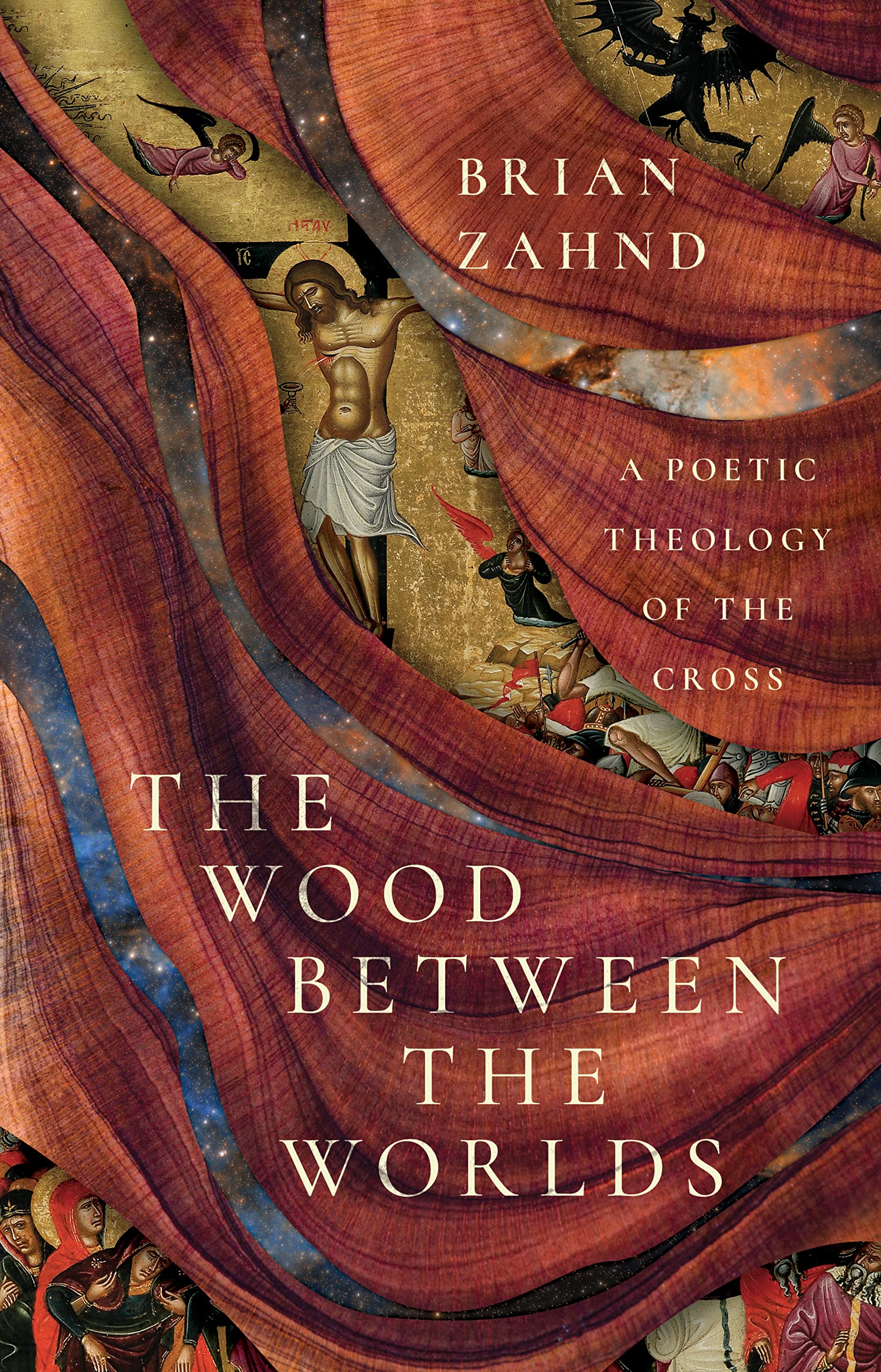
Here's an image of a book cover I love. I haven't read the book but I added it to the questionnaire as an example.
Last week I presented all the contents of my book to a group of eager learners. It was a group of eight. Some were pastors. Most were college students. Everyone asked excellent questions, they provided quality feedback, and my first round of book editing received great boost.
Here are some reflections after my week with this group:
First, I'm wondering about the order of presenting the material. My book covers New Testament background, the Gospels, Paul's letters, and writings from the Ante-Nicene period. I decided to start with Jesus and his disciples and examine texts that appear to suggest Jesus and his followers received payment for preaching, or that they relied on the hospitality of others. We talked about traditional Jewish understandings from the first century, covering topics like hospitality, voluntary associations, and philosophical schools, and how each handled matters of money and pay. From there we looked a Paul's writings. This is where things got really challenging. Without the writings from the Apostolic Fathers, students had a hard time reading Paul, and what he may have been saying, in a new way. It wasn't until day 4 of our 5 day course that we looked at the post-apostolic texts and saw that my seemingly unusual approach to some texts was actually confirmed by later writings.
In retrospect, I'm wondering if it might have been better if I had introduced sources like the Didache and Justin Martyr a bit earlier. Of course, had I done that, there may have still be questions about their reliability but at least students would have had a heads up about how the church seemed to function just after what we read in the New Testament.
Second, I'm thinking about how to make it more engaging for students. Because so much of my material is new and not easily found by looking at what most commentators say about texts, I found myself tied closely to my notes and unable to think creatively about pedagogy. As I become more comfortable with my positions, I'll need to plan questions for groups and times for students to explore on their own. Even though I had written the book, there were parts of the material I struggled with. That made it hard to create a good back and forth with students. This was especially noticeable when students had new ideas or wanted to point out additional things in the Greek text that I had not noticed. There were times when I realized that a position I was arguing in my book was not very strong and other times when I realized a weak argument in the book was actually much better than I realized, simply by speaking it out loud. While the class was gracious with me, in future classes I will be certain to know my positions, clearly present those with solid supporting arguments, and offer students a variety of perspectives while inviting them to wrestle for themselves.Third, it was so valuable to teach the contents of my book before going through another round of editing. While it was uncomfortable when I realized that some positions I was presenting turned out to be untenable, I discovered some new ideas and perspectives, ones that had much stronger support, simply by doing additional prep for the class and by listening to the class ask questions and challenge assumptions. It was as though I had multiple editors sitting with me, helping me think through New Testament texts, contemporary applications of those texts, and things I may have missed about Jewish backgrounds. I was especially impressed on the last day when many new insights and perspectives emerged as we discussed the implications of Christians shifting attention from paid pastoral positions to ones where a group of volunteers might one day take on leadership roles in smaller groups. One of the most fascinating questions that surfaced was about what might happen if we stopped thinking about the institution of the church and its success. If we stopped thinking about church, and focused on God and God's mission, would that be so bad? So many interesting possibilities emerge if we don't have to think about the continuation of an institution.
Overall, I want to offer a huge shout out to my class: Juwon, Jenessa, Paris, Jacob, Josh, Caleb, Luke, and Elijah. I am grateful for your keen insights and gracious engagement with my ideas and arguments. I had an exhaustingly rich and rewarding week with you. Thank you! My book will be stronger because of you.
This week Briercrest Seminary will be hosting our second annual Online Co-Vocational Symposium. Last year it was our first time gathering denominational leaders from across Canada to talk about what we are now calling, co-vocational ministry. We describe someone as working co-vocationally when they are appointed as pastor in a church while also being employed outside the church. That definition has shifted slightly from, someone who is paid as a pastor while also holding outside employment. We've changed as we see some people serving in pastoral leadership without drawing any funds from the church.
This non-paid pastoral arrangement is not new. It's at the heart of my research on the early church and how it functioned. My book goes into great detail about how Jesus, Paul, and many others, would not have considered it appropriate to draw a salary from the church. I'll be presenting an overview of this research at the symposium, from Jesus to the 3rd century, tracing the development of church leadership and the shifting perspective on pastoral pay.
We've come a long way since last year's symposium. A year ago we had a few hunches but very little research. Now we have quantitative data from Canada Revenue Agency's charitable giving reports, qualitative data from denominations across Canada, include research from the church in Quebec, where co-vocational ministry is a dominant ministry paradigm. I have also finished my research on the biblical and theological foundations of pastoral pay and vocation that has been submitted for publication in 2027.
If you happen to be a denominational leader, credentialing coordinator, or church planting director, and you'd like to attend the symposium and hear more about our research findings, reach out to me. I'd love to have you join us for some or all of the day.

Part of my world as a seminary dean revolves around educating counsellors and therapists. At Briercrest we offer two counselling degrees, one focused on preparing students to work with individual clients and one degree designed to equipped students to work with couples and families. Our counselling program is the seminary's largest and it happens to be one of the most difficult programs to get into. It is not uncommon for us to turn away 30% of applicants.
Some seminary deans may lament that their counselling program numbers trump those of their divinity and ministry degrees. Not me. I see great value in the integration of theology and psychology. I've been blessed to take classes at the master's and PhD levels in biblical-theological studies and counselling. During my PhD at Toronto School of Theology I enrolled in a theology course while also taking a course in postmodern family therapy. Later, my dissertation drew on both theological and psychological disciplines. I looked at whether online theological education enhances or detracts from Christian virtue formation. That's theological. And I also explored themes such as anxiety and differentiation between the person and the devices we use to access online education. That's psychological. If you want to read more, check out my book: Glassroom Learning.
Being invited to assume the role of dean, at a seminary that values both the biblical-theological and psychological lenses, felt right. I'll admit, I have far more education and experience in the biblical-theological world, as my degrees and pastoral experience reveal. However, I am married to a psychotherapist. And, my daughter is getting close to graduating with her Master of Arts in Marriage and Family Therapy. So, what I lack in formal education and professional therapeutic experience is more than made up by my family.
Before I wrap up, here's an invitation: if you're thinking about graduate level theological or counselling education, reach out to me. I know a great school.
If you need some help dealing with stress and burnout, or you want to talk to an experienced counsellor who has worked with healthcare professionals, teachers, spiritual care leaders, business owners, and many, many others. Reach out to Erika. She would be glad to help.
![]() |
| After Hours Theology Club |
Have you tuned into The After Hours Theology Club? Designed as a place to direct our students for deeper theological conversation and lighthearted fun, my colleague Dr. Joel Houston and I started the podcast while we were both teaching Introduction to Christian Theology. It's for anyone interested in learning more about theology.
We've been a bit preoccupied lately but more episodes are coming soon. We recorded our latest just last week.
Here are some links if you're interested:
You Tube: AHTC
Spotify: AHTC
Apple: AHTC
An emerging priority that went unmentioned in my 2026 goals was accepting opportunities to speak. Since teaching is one of my strongest gifts, I am somewhat surprised to look back on my time in Saskatchewan and realize that I have not had many chances to speak at churches, conferences, and events. I speak at college chapel now and then and preach occasionally at our local Free Methodist Church, but not a lot. At the turn of the year I sensed God inviting me to be ready to speak more. This might be because, after years of research and writing a book I finally have something to say. It might also be because God is doing something new in my life. Maybe it's a bit of both.
Regardless of why, a trickle has started. Last week I received a phone call from a Canadian denominational leader inviting me to speak about my research at a pastor's conference. I'll say more about this in a future blog post but for now, I'm thrilled to be invited. On Sunday I spoke at the Church in Caronport, a community church that meets in Briercrest's chapel. The lead pastor's wife served as my admin assistant up until she took parental leave to be with their adopted son. It was a joy to preach and to catch a glimpse of them at the service. Here's a link to the sermon video if you're interested.
If you happen to be a denominational leader looking for a conference or workshop speaker to talk about Jesus' carpentry, Paul's tent-making, and how their work might help inform the church's possible future, reach out. My book won't be printed for another year but I've got plenty to say in the meantime.


As dean of the seminary I typically teach three courses per year. This year my load has been less. That has enabled me to work on finishing my book manuscript for the January, 2026 submission deadline. It isn't a strict deadline but I'm treating it like it is. I spent my Christmas and New Year's break eating and playing games with my family. And, because I haven't been teaching I am unburdened from the end of semester grading drudgery to write. As such, I've accomplished my goal of editing two of my densest chapters, both dealing with Paul's New Testament writings on material support for church leaders. It was a ton of work but I am thankful to have met my goal and made it this far.
Speaking of goals, my wife and I crafted a handful of them for 2026. Here are some of mine:
This post is the beginning of my quest to accomplish the second bullet point goal. Here's to accomplishing a bunch more of them in 2026.
Back in the summer I was trying to figure out a way for Co-Vocational Canada to be sustainable. As you may be aware, Co-Vocational Canada is a ministry of Briercrest Seminary that has been funded by a generous grant from the Lilly Foundation through the Pathways for Tomorrow phase 2 initiative. Our funding is set to run out at the end of 2026 (or possibly 2027).
While thinking about sustainability, I was in conversations with denominational leaders to try and find a way to help lay people gain some biblical and theological foundations without having to enrol in a full degree program. As I talked with them I realized that most of them were open to accepting an unaccredited pathway, like our new CoVo certificates, as credible learning for those seeking denominational credentialing.
The certificate concept is simple. Briercrest Faculty members will teach their specialties, split them into 3 hour, online sessions. Participants pay what they would for an accredited course and they receive the same number of in-class hours and weeks as they would for an accredited course. However, there are no assignments and they will have five different faculty members and diverse topics covered over those 12 weeks. We are piloting our Basic CoVo Certificate in January and 12 participants have already signed up. I'm thrilled! This will not only help lay people learn and grow it will also go a long way to making CoVocational Canada sustainable for the long term.
If you want to know more or to sign up, click this link: www.briercrest.ca/covo

What if the Church comprised a massive collection of house churches? As I write the final chapter of my book, this is the question rolling around in my mind. Here's how I've landed on such a radical question:
First, I've looked at the life and ministry of Jesus and his disciples. My theory is that Jesus and his band of followers did not abandon their crafts and vocations but they continued to work as they preached the Kingdom.
Second, I've examined the social context of the New Testament. From voluntary associations to households managed by well-to-do people, the early church assembled in homes. While this wasn't the only context, it was a significant one.
Third, I've explored Paul's teachings for glimpses and clues for how pastors and leaders were paid. After my deep dive I've come to this conclusion: Paul does not seem to endorse a system where church leaders get paid.
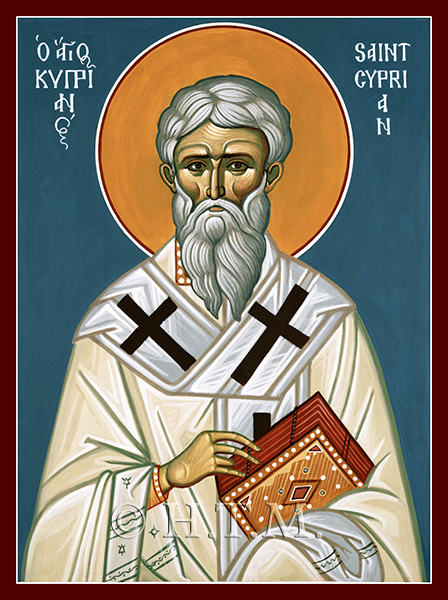
Fourth, I've investigated post-apostolic texts and the world of the early centuries. The idea of paying a pastor appears long after Paul, mid-way through the third century. It shows up in the writings of St. Cyprian of Carthage. He appeals to the Old Testament to argue for a priestly paradigm of ministry where church leaders assume a role similar to levitical priests. While this idea takes time to catch on, Constantine the Great's political reforms make this a favourable paradigm for the church.
So, what if the North American church returned to an ancient model? Could you imagine a modern Canadian or American context where churches were smaller and pastoral expectations less, enabling its team (not one pastor, but many) of leaders to work for pay outside the church?
I spent this weekend in Saskatoon, SK teaching a course entitled "The Heart of Free Methodism." It's required for those interested in becoming ordained or commissioned ministers in the Free Methodist Church in Canada. I had a great time teaching and learning with five pastors from Lakeview Church in Saskatoon and one lay minister from Cornerstone Church in Prince Albert, SK.
One of the ways this course intersects with my current book project is the focus on John Wesley and his system for organizing people who later became known as Methodists. As a Church of England minister, Wesley saw the need to preach the Good News to the poor and to support them to learn and grow in Christian community. The Church of England did not have systems in place so Wesley used societies--small-ish communities that gathered for prayer, worship, and other practices. Societies would comprise a group of classes, essentially small groups of 10-12 people committed to learning and growing in Christian faith. Wesley also had a system of bands, which were even smaller groups that intensely focused on accountability and helping believers grow in holiness.

The beauty of the system was that societies, classes, and bands were all led by lay people. Furthermore, the class was where new people could attend and learn from those who had been walking with Christ for a long time. This has obvious ties to the early church, which met house-to-house. While Wesley's and the early church system is fraught with complications, there is a sort of beautiful simplicity to it.
As I write my final book chapter, one focused on the question, "What now?", I find myself wondering if and how the Canadian church could begin to conceive of itself as a movement of smaller groups or house sized churches. This would take the pressure off of full-time pastors and make room for more leaders to share the load.
It's not a perfect idea, but it's a start.

I'm thrilled!
Yesterday, I received an email from my new editor at IVP Academic:
Hi, Jason:
I have good news from the Publishing Committee! The Publishing Committee has approved your proposal for Funding Preachers in the New Testament and is offering a contract. Congrats! We are excited about the prospect of having this project here at IVP Academic.
I look forward to working with you on this project, and I’m thrilled that it was so warmly received by the Committee.
This journey began three years ago. It started with an idea and, if all goes well, maybe it will be published in the coming year or two. Scroll down to read more.
Now, I am happy to report two things: first, I have nearly a complete manuscript drafted. And second, a fellow dean, who is also early in his publishing career, put me in touch with an editor. That editor likes my proposal (I ended up compiling and submitting it) and is bringing to her publishing house's editorial committee tomorrow!
I'm thrilled, nervous, and exited. So stay tuned...
Oh, and as it turns out, my prolifically published friend's advice was not quite accurate. The publisher did not need to see the full manuscript before submitted it to the process.
The next step in preparing my book proposal for an editor is to state my book's thesis. This step was surprisingly easy and fairly straightforward. Here's what I've come up with:
Title: Funding Preachers in the New Testament: Rethinking paid Christian work in the First Century and Today
Thesis: In my book, I argue that the dominant assumption about how early church ministry was funded, that early church leaders lived off the generosity of Christian members, is misguided. Rather, most religious leaders, including Jewish sages, rabbis and early Christian pastors, relied on manual labour as a means of self-support. It was not until the post-apostolic church that church leaders began to rely exclusively on support from others. This has implications for how we should think about paid congregational ministry today, especially with the growing popularity of multi- and bi-vocational ministry.
It is important for the thesis to carry the whole project. Therefore, I am trying to ensure each chapter hinges on the thesis. I'll say more in future blog posts.
The next step in preparing a book proposal for an academic editor is to envision and describe my book's audience. In her book, The Book Proposal Guide, Laura Portwood-Stacer identifies four possible audiences for academic books: 1) other scholars; 2) undergraduate and graduate students; 3) practitioners; and 4) general readers (this is not really a group and naming this as an audience should be avoided).
In writing my book I've tried to keep two audiences in mind: other scholars and practitioners. Since I'm making claims that have not been made before, I'll need to engage with scholarly sources and show support for my arguments. Therefore, my book is written primarily for other scholars. However, I also want to get my ideas into the hands of practitioners, allowing my ideas to impact those who are serving in pastoral ministry (pastors) and overseeing pastoral work (denominational leaders).
So, without further ado, here is the paragraph describing my book's audience:
My book, Funding Preachers in the New Testament: Rethinking paid Christian work in the First Century and Today will challenge previously held assumptions among New Testament scholars and practical theologians about pastoral work in the New Testament. Whereas New Testament professors will be interested in my approach to biblical texts and contexts, practical theologians, particularly those educating pastors and those in ministry, will benefit not only from the texts and contexts but also my application for today. Furthermore, practitioners, such as multi-vocational pastors, denominational leaders, and church planters will also find my book interesting since I’ve written with them in mind. This is particularly true in the final chapter where I apply biblical principles to contemporary ministry contexts. My book’s appeal to practitioners is evident by my experience of being invited to speak about this topic to pastors at the Free Methodist Church in Canada’s General Conference in 2024. I have also been in contact with two other Canadian denominations whose leaders have also shown interest in my work.

As I continue researching and writing, I am working through the steps of preparing a book proposal recommended in The Book Proposal Book. Today I'll be describing Step #6 - Collect a list of comparable titles.
Comparable titles are books that are similar to the book I am writing in terms of audience. At first I thought this step was like a literature review, where I would find books that are written on a similar topic to mine and summarize them. According to The Book Proposal Book the list of comparable titles is a compilation of books that are similar in audience. Its purpose is to show editors that there is a market for my book. This is proving to be one of the hardest parts of building my proposal. Since my book is about how pastors and church leaders were funded in the historical period of the New Testament, I am crossing into at least two areas that have been commonly explored. On the one hand books have been written about money and the New Testament. Of course on the other hand, books have been written about pastoral ministry in the New Testament. Neither of these areas are directly related and they do not normally intersect with each other. When it comes to finding comparable titles I attempted to find ones that have taken a unique approach to an aspect of New Testament studies that could be similar to my work.
Here are some books I've found so far:
The Open Sanctuary: Access to God and the Heavenly Temple in the New Testament (Baker Academic, 2024).
This important work provides a corrective to the way many people understand the Jerusalem temple in early Christian thought and is the first comprehensive study of the heavenly temple in the New Testament. Similar to The Open Sanctuary, my book is the first comprehensive study about an important another theological concept, funding for vocational ministry. I too have drawn on New Testament writings and early Christian literature as a way to do a deep dive into a particular topic and correct previously held assumptions
Strange Religion: How the First Christians Were Weird, Dangerous, and Compelling (Brazos, 2024).
This book invites readers to see early Christians as practicing a whole new way of thinking about and doing religion that would have been seen as bizarre and dangerous, when compared to Roman religion and most other religions of the ancient world. In a similar way my book calls readers to read New Testament texts with the social context in mind but unlike Gupta's work, my chapters progress from the ministry of Jesus through Paul's letters and into early Christian literature rather than focusing mainly on the social context.
Remarriage in Early Christianity (Eerdmans, 2024).
In this book, A. Andrew Das takes a deep dive into the subject of remarriage. I mirror Das's chapter progressions, moving from Jesus and the Gospels through Pauline work and into early church literature. Yet unlike Das's work, my focus is on the theme of ministry funding rather than remarriage. Both of our books are written for scholars primarily with some crossover appear to laity with an interest in this topic.
Minister Matters: Pastors, Their Life and Work Today (Cascade, 2024).
This edited volume provides a multivalent approach to how pastoral work is seen and performed today. Like my book, it provides insights into the contemporary office of pastor by looking at different aspects and angles of the work through theological lenses. My book relies on the New Testament scriptures and early church documents as the lens to look at a the pastoral vocation, which comes as an application at the end of the book.
I have attempted to provide four comparable titles that are written on similar themes and to similar audiences to my book. In my next post I will discuss the audience of my book. Stay tuned!

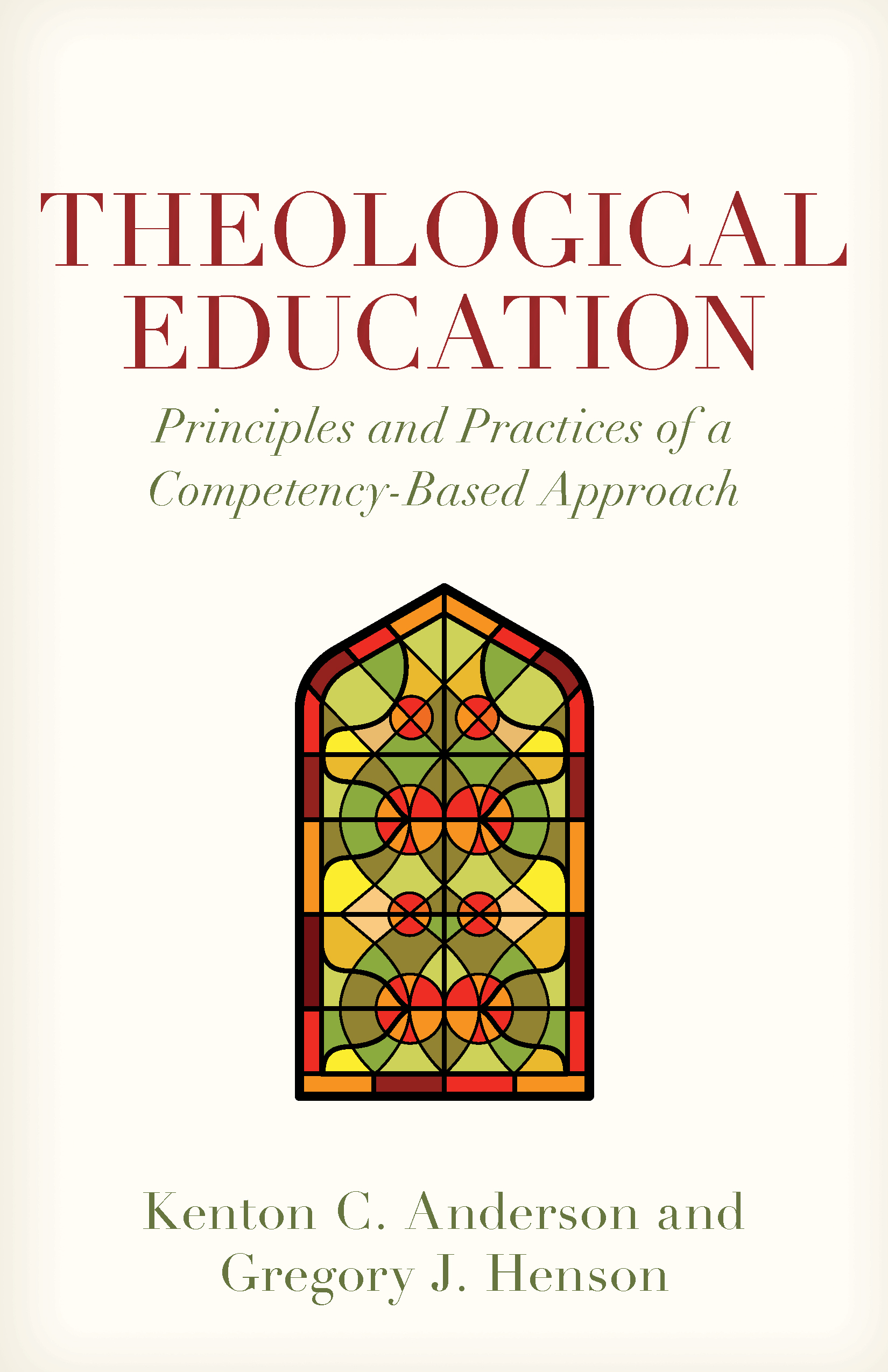
Kenton Anderson and Gregory Henson's book, Theological Education: Principles and Practices of a Competency-Based Approach is a helpful introduction to CBTE for those who might be curious. You can read my review here: https://www.faithtoday.ca/Magazines/Jul-Aug/Theological-Education-Principles-and-Practices-of